
If you own a home with a crawl space in Knoxville, Farragut, or Maryville, you are almost certainly built on red clay, and that single fact explains musty floors, moldy joists, sticking doors, and foundation cracks that seem to appear after every wet spring. This guide explains the science in plain language: how clay interacts with your crawl, why vented designs fail in East Tennessee, and what actually fixes the problem long-term.
What is Knoxville red clay, and why does it move?
Red clay (ultisols common across the Southeast) contains minerals that absorb water into their structure. When wet, clay swells; when dry, it shrinks. That volume change exerts pressure on foundation walls and footings, especially block and brick crawls common from the 1960s through 1990s in Knox and Blount County.
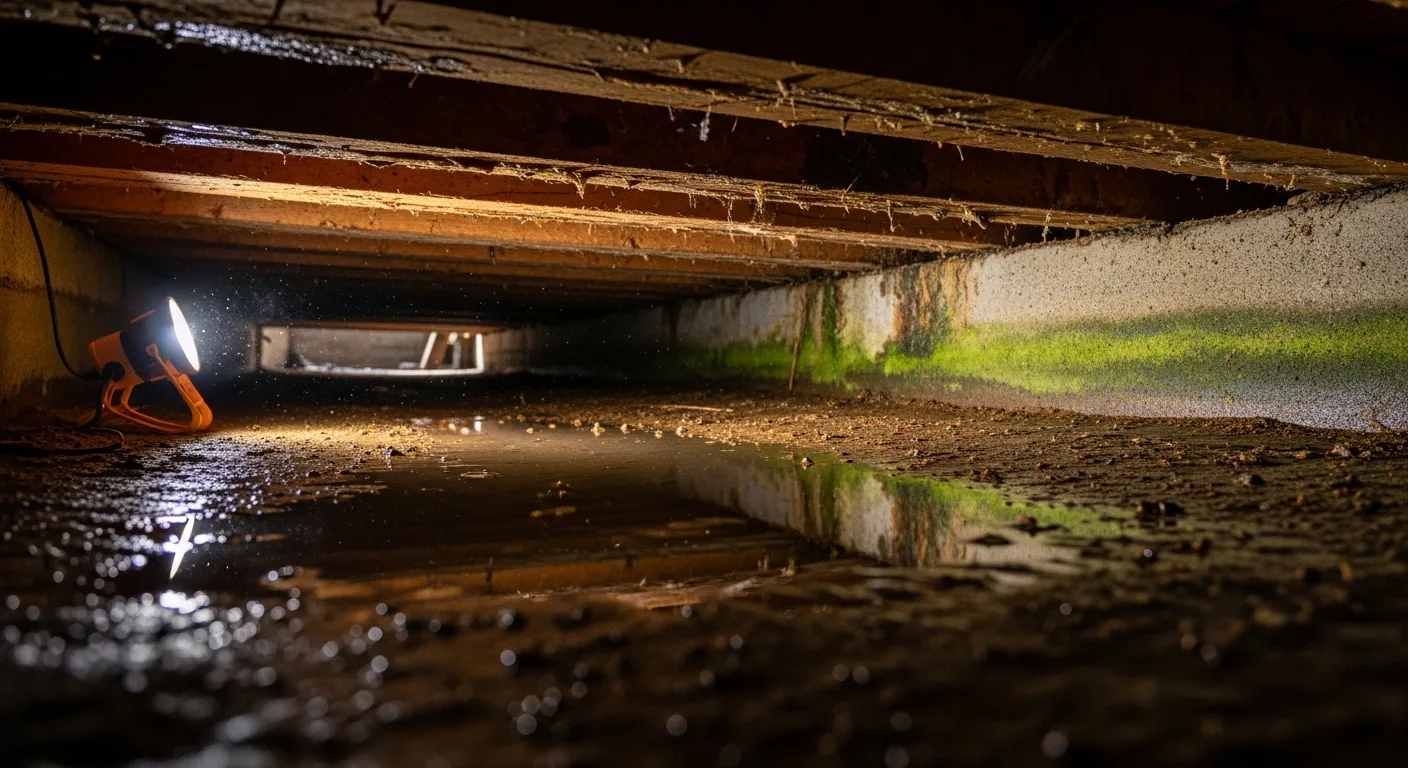
Unlike sand that drains quickly, clay holds water. After a Tennessee Valley thunderstorm, soil under your home can stay saturated for days while surface puddles disappear. Water vapor then rises through bare crawl soil into floor joists, independent of whether you see liquid water on the ground.
The Knoxville MSA median home value (~$256,600) reflects desirable land, but the same clay that supports subdivisions along I-40 and I-75 also creates recurring maintenance: crawl moisture, sill plate rot, and diagonal cracks above windows.
The humidity stack: clay + rain + Smokies air
Knoxville averages 50+ inches of precipitation annually. Summer relative humidity often exceeds 70%; proximity to the Great Smoky Mountains adds a moisture corridor many inland cities lack. Building codes from earlier eras assumed vented crawls would “breathe”, in humid climates, vents import wet outdoor air that condenses on cool joists and ducts.
The result: relative humidity in a vented crawl can approach 100% while outdoor air feels merely sticky. Mold colonizes at 60% RH. Wood equilibrium moisture content rises; joists lose strength; hardwood floors cup upstairs. The crawl is not failing because you neglected it, it is failing because climate and soil outperform the original design.
How clay specifically damages crawl spaces
1. Hydrostatic and capillary pressure
Water in clay pushes against foundation walls (hydrostatic pressure) and wicks upward (capillary action). Block walls can show efflorescence (white mineral deposits) and spalling. Interior crawl soil stays damp, perfect for mold and termites.
2. Cyclic expansion and contraction
Dry August soils pull away from footings; wet March soils swell against them. That cycle opens sill plate gaps and cracks mortar joints. Doors stick in humid seasons when frames twist. Foundation waterproofing addresses wall water; encapsulation stabilizes vapor from soil.
3. Slope and grading failures
Farragut lake lots, Maryville hillside streets, and West Knox neighborhoods toward the Tennessee River often grade toward the foundation. Gutters dumping at corners saturate clay within feet of the crawl, we see repeating moisture at the same pier year after year until drainage is corrected.
4. Vapor emission through bare soil
Even without liquid water, soil emits pounds of water vapor per day under a home. Without a sealed vapor barrier, that vapor hits joists directly, the dominant moisture source in many inspections.
Why vented crawls fail in East Tennessee (not Arizona or Ohio)
Arizona slab homes fight heat; Ohio basements fight perimeter water with different drainage norms. Knoxville fights latent humidity plus clay vapor year-round. Closing vents without encapsulation can worsen issues temporarily; the correct sequence is moisture source control, mold remediation if needed, then sealed liner and dehumidification, the full crawl space encapsulation specification.
Industry building science (ANSI/RESNET, crawl space research over two decades) supports conditioned, sealed crawls in humid South climates. Vented crawls made sense when energy was cheap and mold was misunderstood, neither is true for 2026 Knoxville homeowners.
Symptoms homeowners blame on “old house”, actually clay + moisture
- Musty smell that air fresheners mask but never fix
- Bouncy or sagging floors over the crawl
- Mold on fiberglass batts (black staining, collapse)
- Rust on ductwork and metal pier caps
- High summer electric bills (HVAC fighting latent load)
- Cracks in drywall after wet/dry seasons
- Inspector moisture flags in Farragut or Maryville resale
Case patterns we see by suburb
Farragut: Large footprints, lake humidity, pier-heavy crawls, mold + dehu sizing critical. Farragut encapsulation services.
Maryville: Sloped lots toward Smokies, mixed-era housing, drainage + encapsulation combos. Maryville crawl space repair.
Knoxville core & Powell/Halls: Post-war crawls on clay, often under-maintained until sale. Knoxville encapsulation.
What does NOT fix clay-driven crawl failure
- 6 mil hardware-store plastic laid loosely on soil
- Bleach spray on mold without moisture control
- Adding more vents in summer (imports humidity)
- Box-store dehumidifier that rusts out in one season
- Ignoring standing water before installing liner
What actually works: the fix stack
- Identify clay soil and drainage patterns: Check whether downspouts discharge away from the foundation and whether the lot slopes toward the crawl. Red clay holds water, puddles near vents after rain are a red flag.
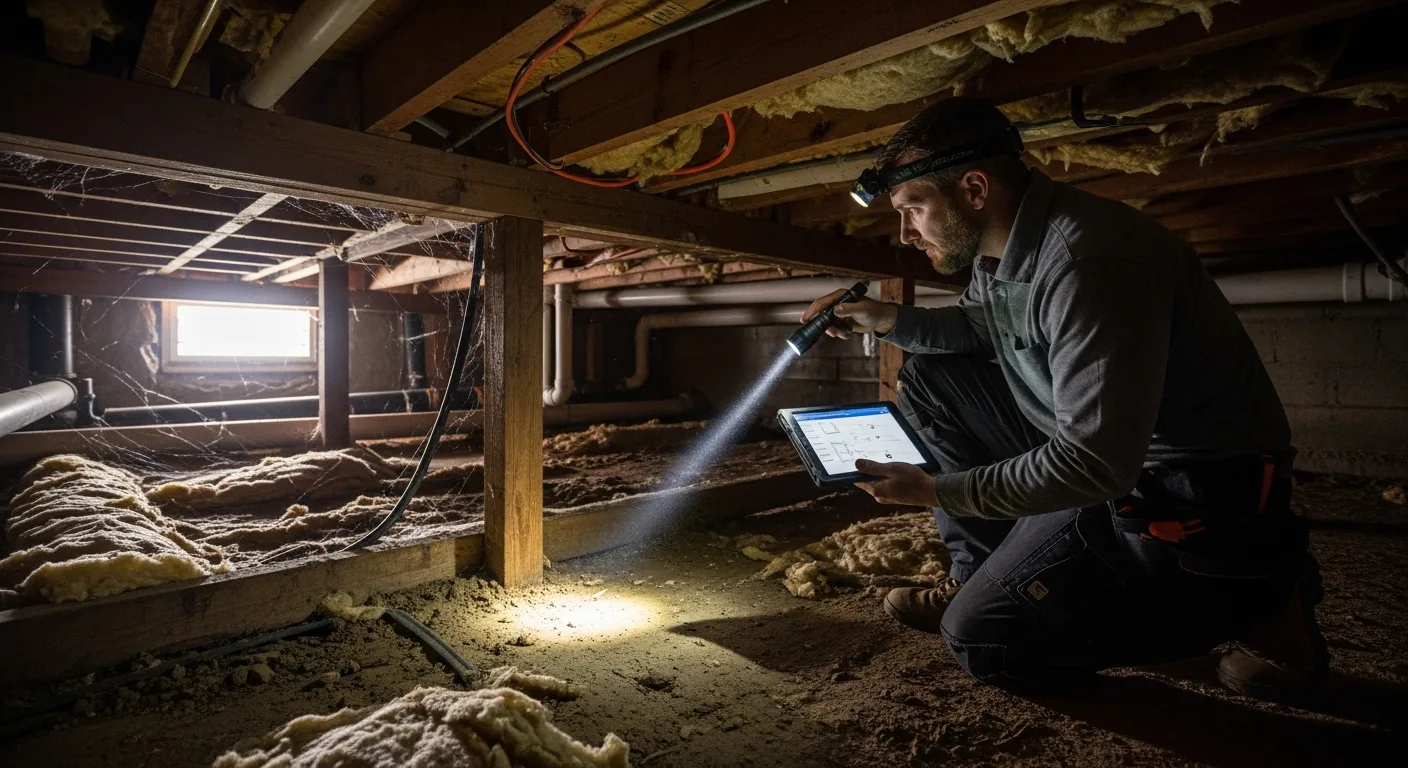
- Measure crawl space humidity: Use a hygrometer or request a professional inspection. Sustained RH above 60% in Knoxville summers means mold risk and clay-driven vapor load.
- Address standing water before sealing: Install drainage or sump if water enters during storms. Sealing over pooled water traps failure under vapor barrier.
- Treat mold and rot on joists: Remove affected insulation, remediate mold, and sister joists if structural damage exists, common on clay lots with long wet seasons.
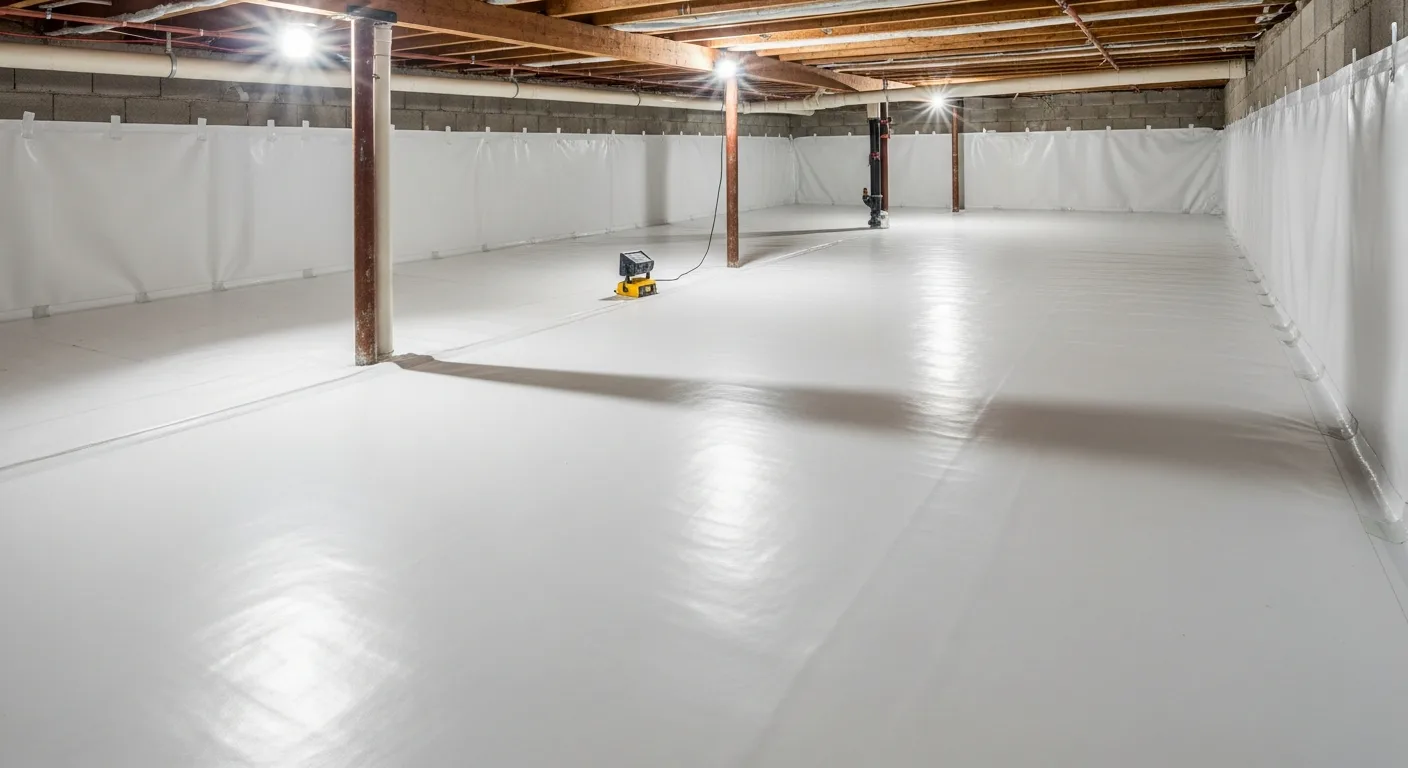
- Encapsulate and control humidity: Install reinforced vapor barrier, seal vents, and add a commercial dehumidifier sized for your crawl footprint in East Tennessee.
Investment typically $5,000–$15,000 (average $8,500), detailed in our Knoxville encapsulation cost guide. Mold removal is scoped first when growth is active.
Clay soil and foundation cracks, when to worry
Hairline cracks in block may be cosmetic; horizontal cracks, bowing walls, or widening gaps over 1/8 inch need structural evaluation. Encapsulation reduces moisture-driven movement but does not replace engineering for severe failure. If doors stick only in spring and cracks close in fall, clay cycling is a likely contributor, document with photos for contractors.
Radon, pests, and clay
Sealing crawls can change radon pathways, test if your zip is in a high-potential zone (parts of Knox and Anderson County). Termites love moist wood on clay; dry, sealed crawls are less attractive. Neither replaces pest contracts, but moisture control is foundational IPM.
Timeline: ignoring clay moisture vs acting now
Year 1: Musty smell, minor mold on insulation. Year 3–5: Joist surface rot, soft spots in floors, higher HVAC bills. Year 7+: Sistering joists ($3K–$8K), subfloor work, failed home inspection. Early encapsulation on clay is cheaper than structural rework, the math favors inspection now.
Knoxville climate data homeowners should know
- 50+ inches annual rainfall, saturated clay common spring
- 70%+ summer humidity, vented crawls import moisture
- 60% RH, mold threshold (target below with dehu)
- Red clay expansion, seasonal foundation stress
- High crawl prevalence vs national average in East TN
Next steps for Knoxville homeowners on clay
Schedule a free crawl inspection with moisture documentation. We serve Knox and Blount County, call 865-344-5507, view before & after results, or read about dehumidifiers for humid climates.
Educational content for homeowners in Knoxville, TN, not engineering advice for a specific structure. Consult a licensed contractor for your home.